Renovation of Résidence ECLA in Archamps
Conversion of former office spaces into a residential complex using a hybrid wood-concrete-steel construction method
Location
Archamps, France (74)
Client
OCEANIS PROMOTION
Architectural Design / Engineering Consultancy
Patriarche Augmented Architecture
Subcontractors / Project Partners
APC Étanchéité and Les Z'elles
Scope of Work
10,200 m² of timber frame façades, 75 m³ of glulam structure
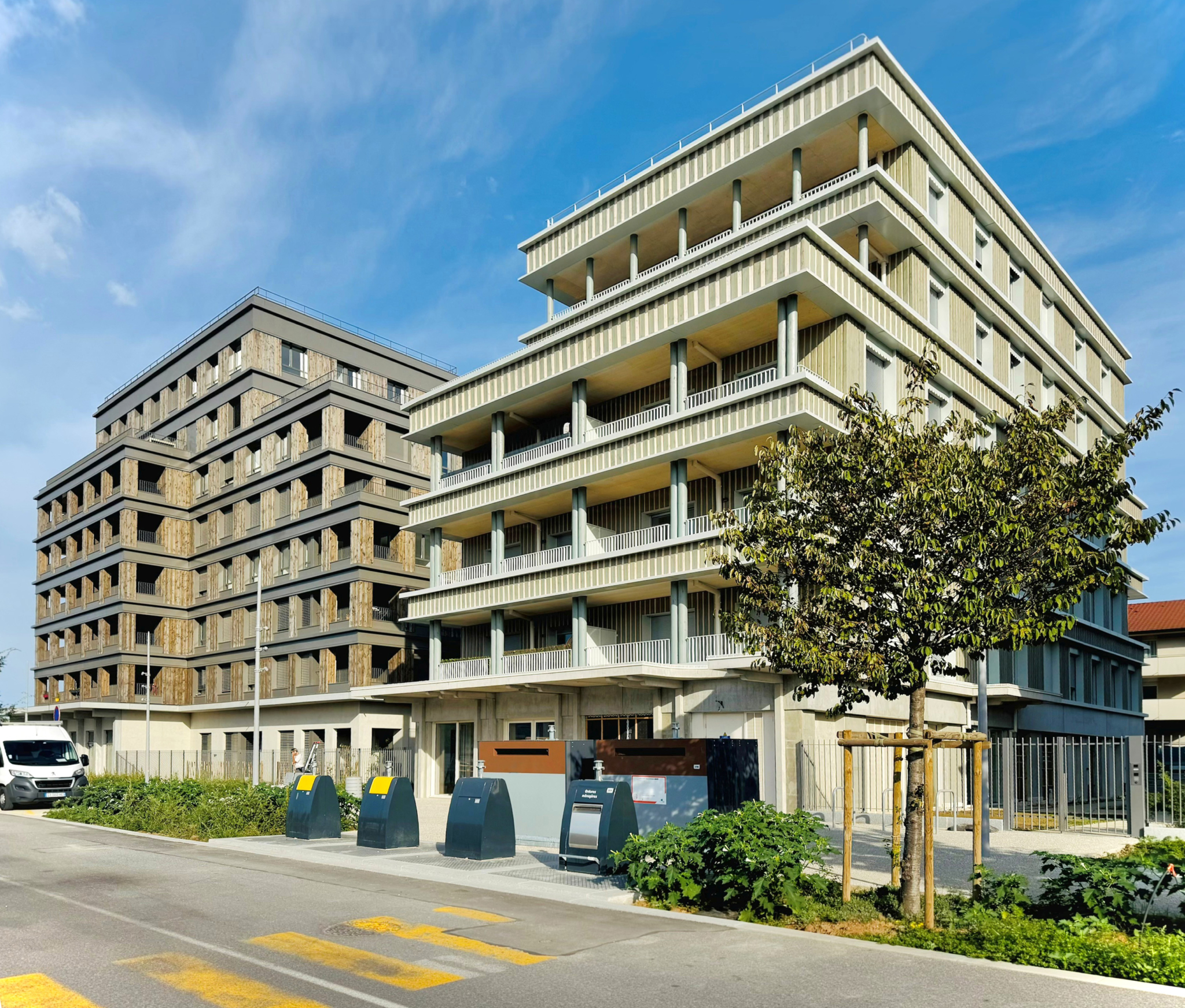
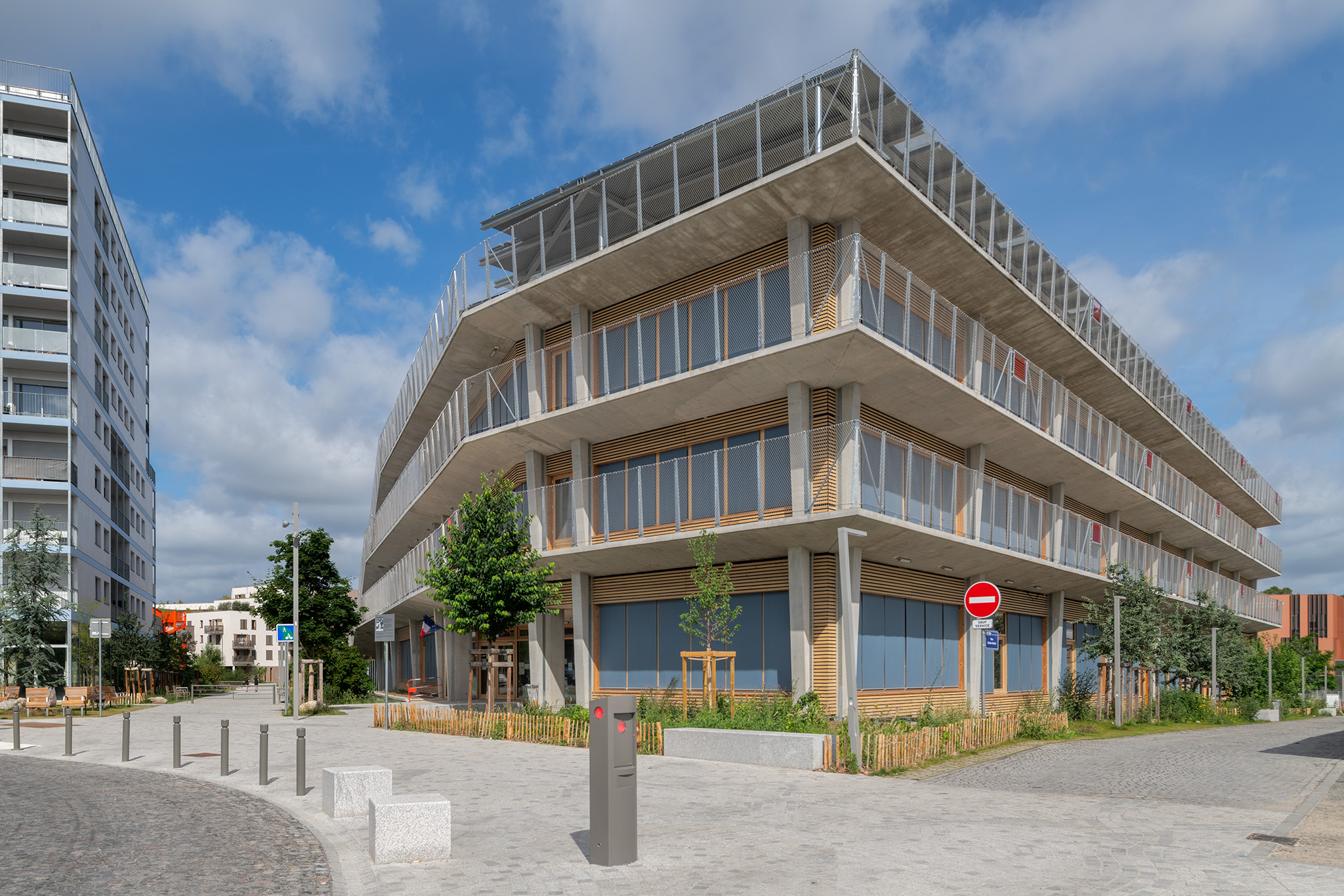
In Archamps, Haute-Savoie, a former office building is undergoing a spectacular transformation. The centrepiece of this large-scale project is the newly developed co-living building Résidence ECLA, which will provide approximately 800 beds for students and young professionals from the start of the 2025 academic year. This is far more than a simple change of use; it is a complete renovation using a hybrid construction method of wood, concrete and steel. A project where our teams have brought their full expertise to bear in service of an innovative form of living.


These are the cornerstones of our contribution: firstly, the planning stage, during which a thorough study was carried out in advance together with our project partners/subcontractors APC Étanchéité and Les Z’elles, to anticipate all construction challenges and create the conditions for smooth execution. Secondly, the prefabrication and assembly phase: of the 10,200 m² of timber frame façades installed, 8,500 m² were prefabricated in our workshop in Île-de-France, allowing rapid and precise on-site assembly, while the remaining façades in areas inaccessible to cranes were constructed directly on site. Thirdly, the scheduling: despite the complexity inherent in any renovation, the project is meeting its deadlines, demonstrating the uncompromising commitment of all involved.
When converting an existing building, unforeseen events must be factored in alongside technical requirements and energy efficiency standards. Here we faced a dual challenge: implementing a new usage concept that transforms unused office spaces into modern living areas, combined with a long-term improvement of the building envelope’s thermal performance through new façades.
Building renovation is a choice that is resource-efficient compared to new construction, reduces construction waste, and makes use of and enhances already developed land. An approach that aligns perfectly with the sustainable development goals we pursue at Rubner.