Heinrich-Hoffmann-School in Darmstadt
Sustainable Construction Concept for Pleasant Learning
Location:
Darmstadt, Hessen (DE)
Client/Contractor:
Wissenschaftsstadt Darmstadt (DE)
Architecture:
v-architekten, Cologne (DE) – Design; Blumenstein + Architekten GmbH, Darmstadt (DE) – Tendering
Structural Engineering:
KREBS + KIEFER GmbH, Darmstadt (DE)
Executing Company:
Rubner
The Wissenschaftsstadt Darmstadt has commissioned Rubner Ingenieurholzbau to realize the timber construction works of a timber hybrid building for the new Heinrich-Hoffmann-School in the city center. The design by v-architekten from Cologne and the planning by Blumenstein + Architekten GmbH from Darmstadt included three cubes: an elementary school, a daycare center, and a gymnasium. The structural planning was provided by KREBS + KIEFER GmbH from Darmstadt.


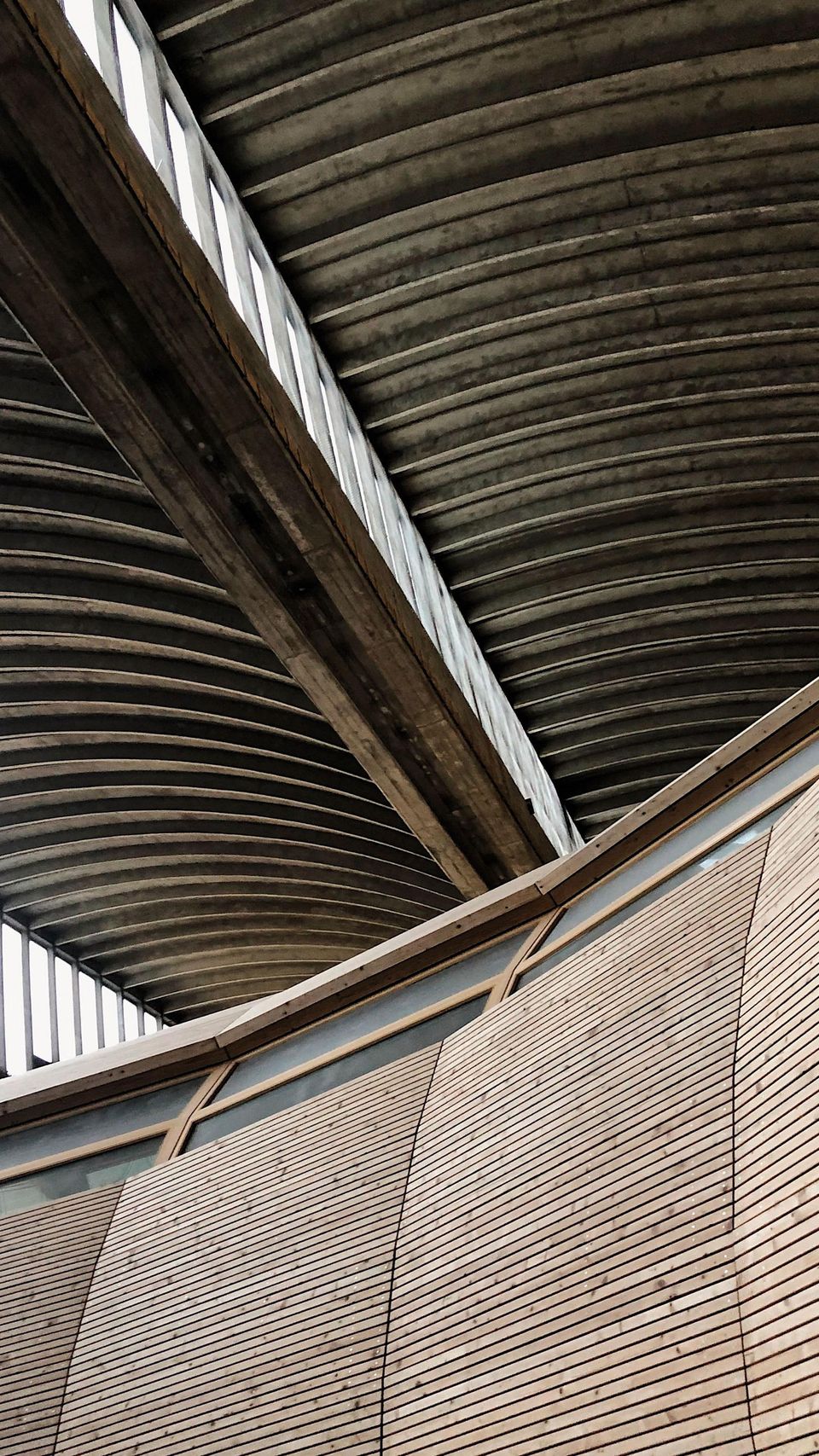
In this project, the buildings of the elementary school and the daycare center were constructed using a reinforced concrete skeleton with wooden panel exterior walls – both feature a spacious, centrally located atrium, with the daycare center having three floors and the elementary school four floors. A total of 2,070 m² of prefabricated wooden panel wall and cladding elements, as well as 876 m² of wood-glass facades with 589 m² of wood-aluminum windows, were used for an energy-efficient and modern building envelope across the two structures. The third building, the large gymnasium, was constructed using solid wood construction with a structure made of 80 m³ of beech laminated veneer lumber and 1,087 m² of cross-laminated timber elements for walls and ceilings. This is an example of a versatile fabrication and assembly planning that is optimized for the individual architectural needs of this ensemble.
The building complex in the center of Darmstadt is surrounded by listed buildings, including the city wall. The three cubes are positioned in direct sight of each other and are connected by pathways to one another and to the surrounding development: The green schoolyard in the center is intended for multiple uses, serving both as a playground for students and as a public play area for local residents.
The energy concept of the educational infrastructure is also designed for sustainable operation: Climate goals are achieved through the timber construction, green roofs with rainwater storage, photovoltaic systems, and the greening of the retaining walls for the lowered schoolyard. Based on thermal simulations, a cooling concept has been developed that allows summer heat to escape overnight through the roof of the atrium while cool outside air flows in at ground level.