Taranto Aquatics Stadium
New swimming stadium for the 2026 Mediterranean Games
The new Stadio del Nuoto, one of the main sports venues for the 2026 Mediterranean Games in Taranto, is currently under construction in the southern Italian coastal city of Taranto. The project will welcome athletes from across the Mediterranean region whilst creating long-term added value for the city.
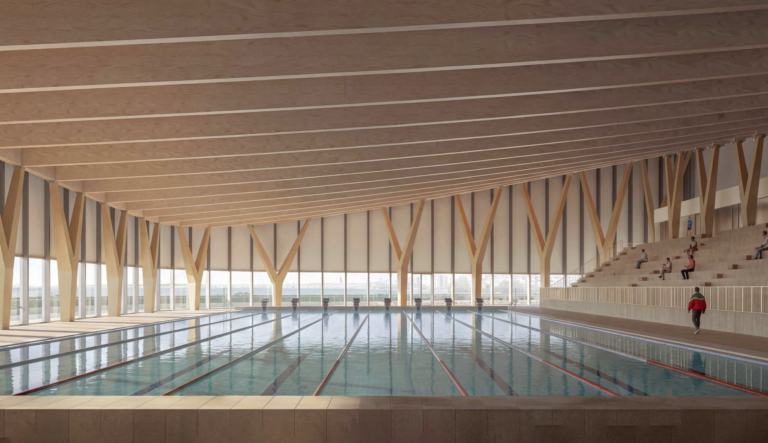
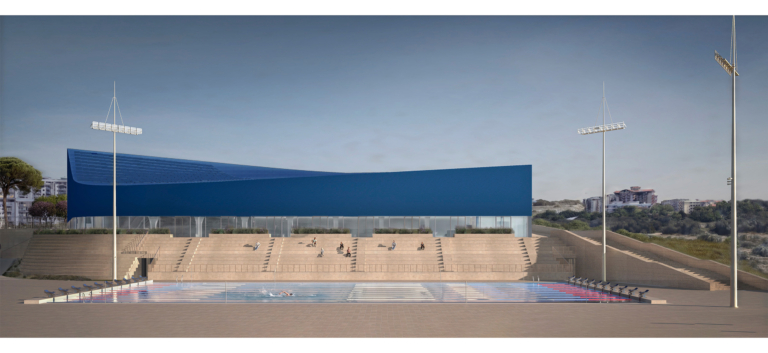
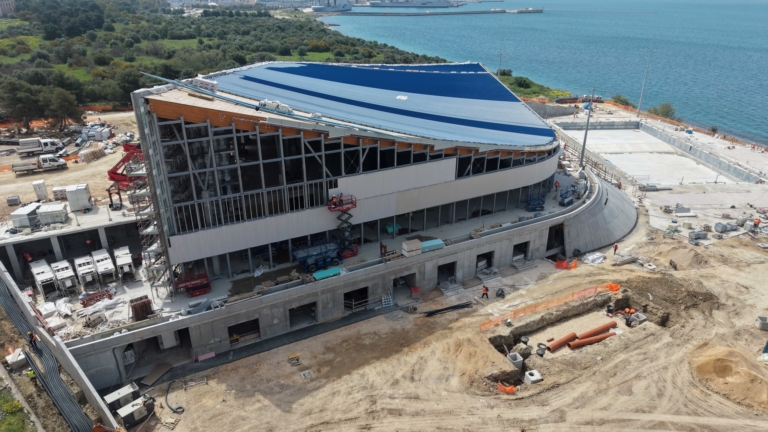
The new swimming stadium covers around 12,000 m² and houses two Olympic-sized pools: an indoor pool with stands for approximately 980 spectators and an outdoor pool
with around 1,000 seats. In addition to hosting international competitions, the facility will in future also offer training facilities, leisure activities and sports medicine services for the local population.
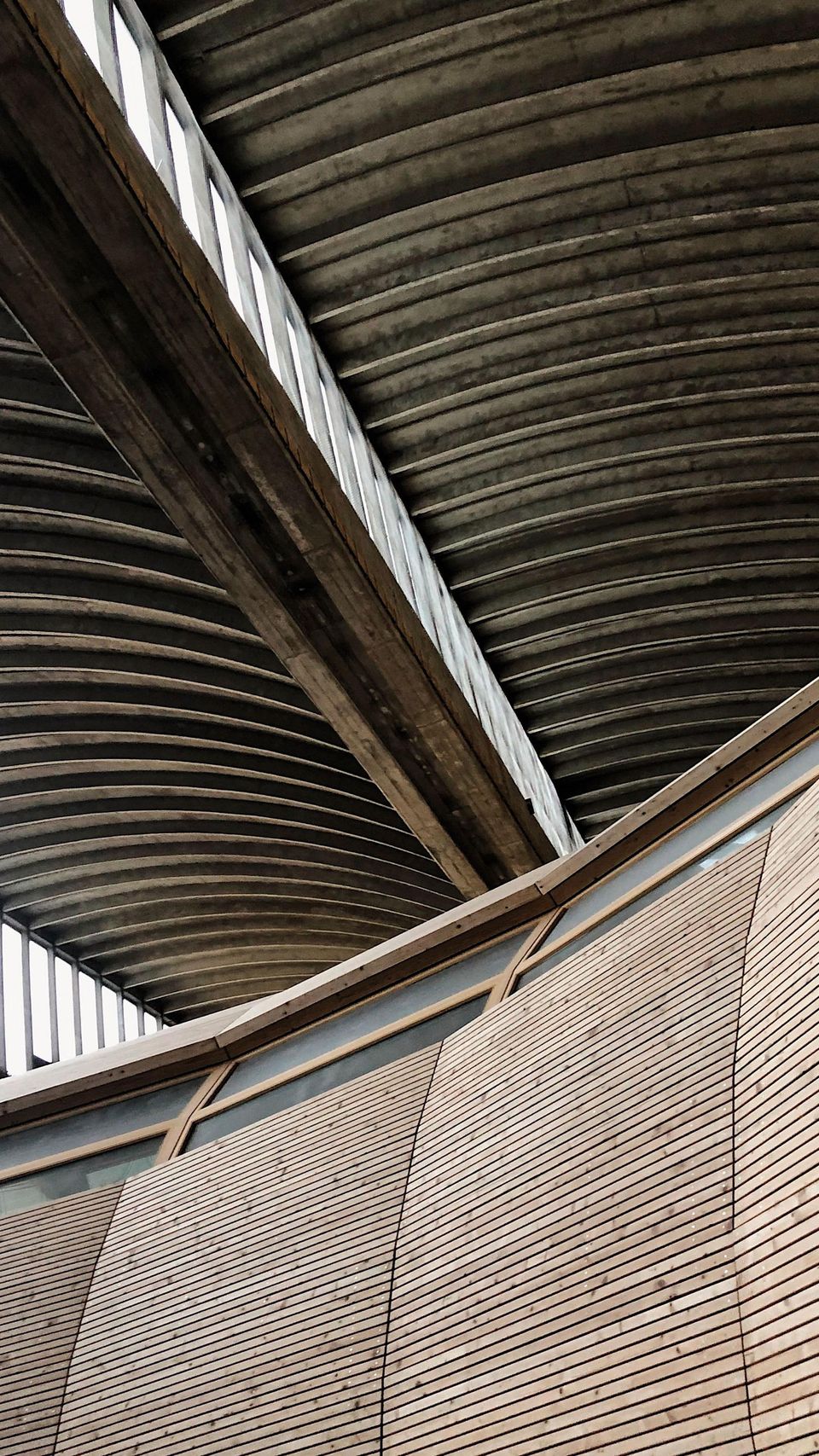
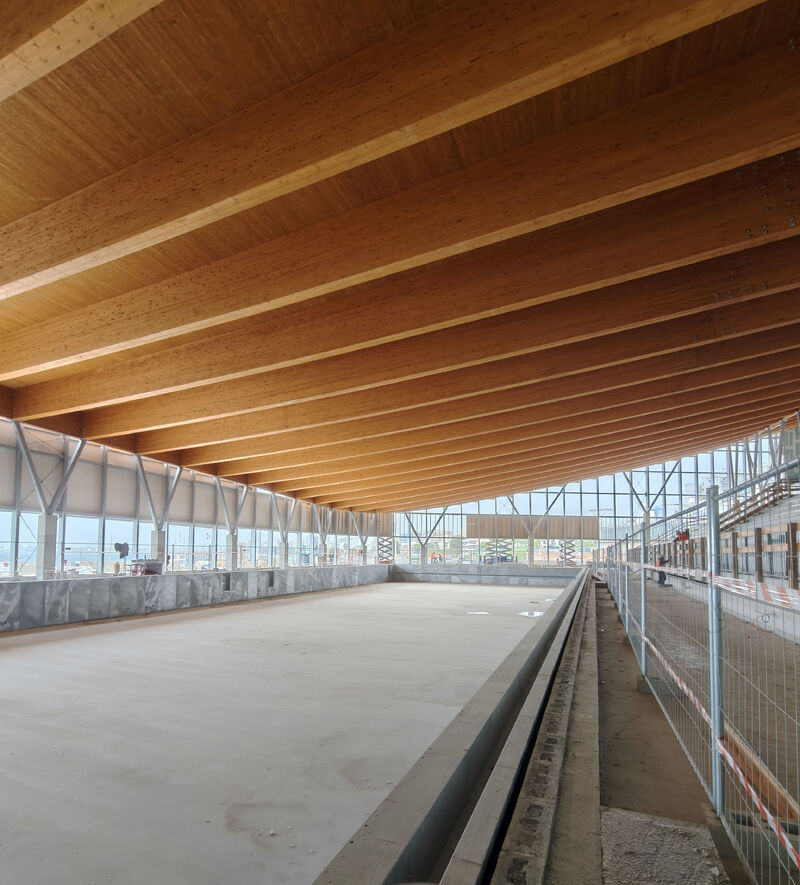
At Rubner Ingenieurholzbau, we are constructing the timber roof structure for the indoor swimming pool. The roof area, measuring around 3,800 m², is supported by large curved glulam beams and CLT roof panels, giving the building its characteristic double-curved shape.
The design for the Taranto Swimming Stadium is based on the winning entry in the design competition, submitted by MDU Architetti.
During the Technical and Economic Feasibility Study (PFTE) phase, the practice was supported by Open Ingegneria for structural engineering, ESA Engineering for building services, and PXC Paesaggisti per Caso for landscaping, with technical consultancy provided by Carlos Loggia and geological consultancy by Andrea Fiaschi.
The subsequent detailed design phase involved Sportium for the architecture, SCE Project for the structural engineering, STAIN Engineering for the services, and PiùDinsieme for sustainability.
Project announcement A landmark project
Architecture, sport and sustainability
The Stadio del Nuoto was developed as one of the key projects for the 2026 Mediterranean Games. The architecture draws on elements of Taranto’s historic bastions and reinterprets them in a contemporary form.
From the outset, the sustainable use of resources also played an important role. Wood offers a high load-bearing capacity while remaining lightweight and maintaining a favorable carbon footprint. At the same time, the timber structure creates a warm, unique atmosphere inside the swimming hall.
Even the initial visualisations made it clear: this is not just a sports venue for an international event, but a new architectural landmark for the city.

Start of construction
From design to reality
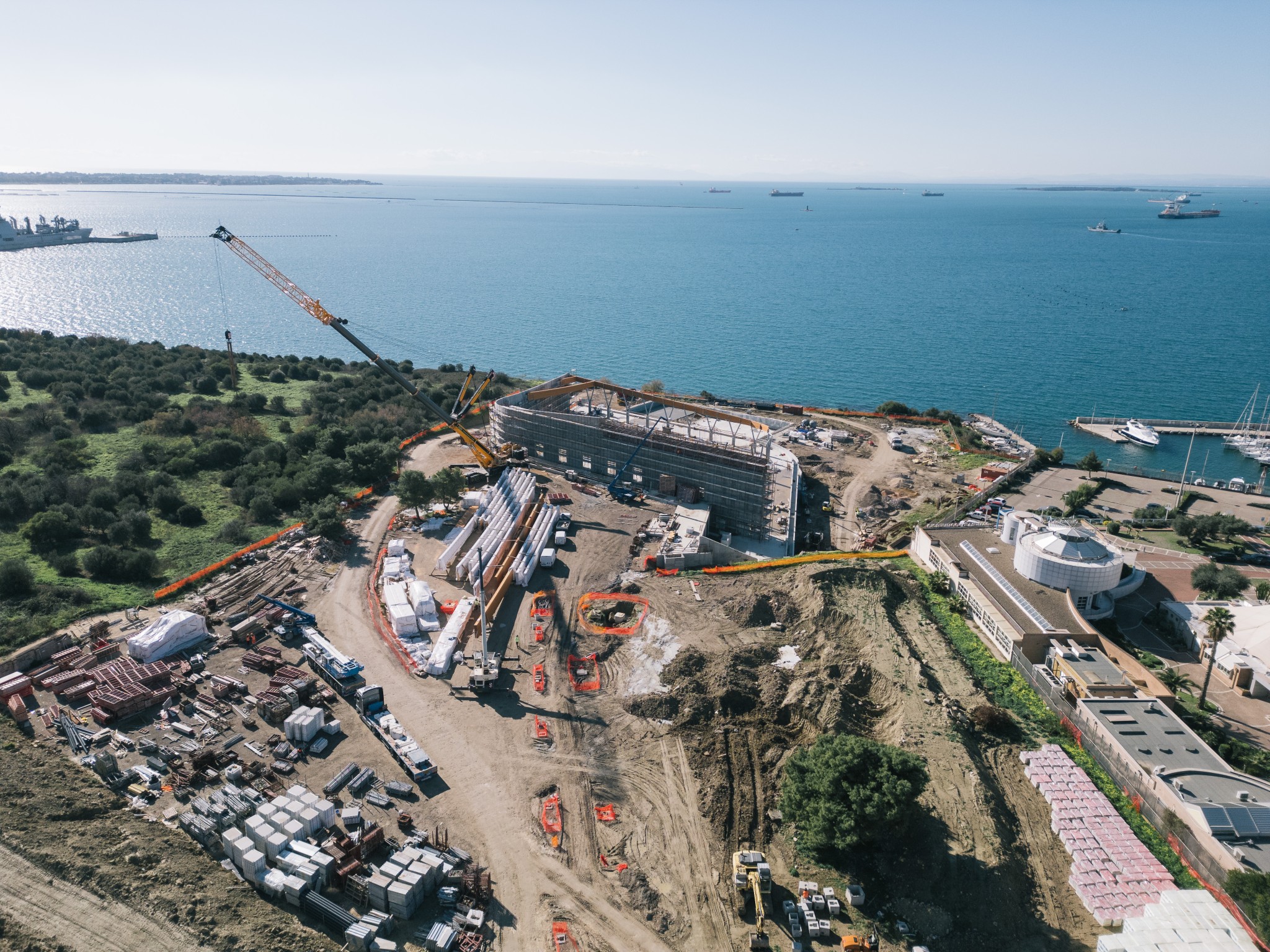
With the start of construction, the plans began to take shape on site. Step by step, the architectural vision is now becoming a visible structure.
The project’s location right on the coast presents particular challenges. Wind conditions from the sea regularly affect the progress of construction work and require flexible planning of assembly and lifting operations.
Logistics on site also demand precise coordination. Several trades are working in parallel within a limited space, whilst large timber elements need to be temporarily stored. For us, this means close coordination of all processes – from the delivery of components to assembly on site.

Assembly of the first timber elements
As the roof structure takes shape
A significant milestone in the construction process is the assembly of the first elements of the timber roof structure.
For the structure, we supply and install:
- 860 m³ of glued laminated timber
- 342 m³ CLT roof panels
- 11,500 kg of steel connections
The roof structure is supported by 26 large curved glulam beams. The longest of these beams reach a length of up to 51.80 metres and weigh around 19.5 tonnes.
Each main beam is first assembled on the ground from two elements. We then lift it into its final position using a 750-tonne mobile crane. Several installation teams work in parallel to implement the complex roof geometry step by step.
With every girder installed, the architectural vision of the project becomes more visible. What once began as a sketch on the drawing board is now taking shape as an impressive timber structure above the swimming pool.

Complexity in Motion
Logistics as Part of Engineering
The location of Torre d’Ayala directly on the seafront placed particular demands on the operations at the construction site. Limited space, exceptionally large timber elements, multiple teams working simultaneously and large lifting equipment had to be coordinated with precision.
The temporary storage of components as well as the sequence of delivery and assembly were also part of this planning. An additional challenge was the changing and at times strong wind from the sea. It directly influenced when lifting operations could be carried out and required flexible planning as well as continuous coordination between the teams.
Logistics was therefore not a downstream part of the execution, but an essential component of the engineering.
16 Weeks on Site
From the installation of the first elements to the completion of the entire timber structure, approximately 16 weeks elapsed.
A timeframe that demonstrates what difference a high degree of prefabrication, detailed planning and precisely coordinated processes on site can make.
16 weeks on site
26 curved main girders
up to 51.80 m girder length
approximately 3,800 m² roof area
From Structure to Architecture
With the completion of the timber structure, the appearance of the Stadio del Nuoto changed once again significantly. Step by step, the visible load-bearing structure became the finished roof landscape.
The timber structure realised by us was integrated into the overall system of the building and completed on the outside by the metal roof cladding. In the finished structure, the large curved surface above the indoor swimming hall stands out clearly and immediately defines the silhouette of the stadium by the sea.
The roof is part of a larger architectural interplay. The building extends across three levels that slope down towards the sea. This creates a continuous relationship between the two swimming pools, the interior spaces and the landscape of the Mar Grande.
Across a total area of approximately 12,000 m², the Stadio del Nuoto combines an Olympic 50-metre indoor pool, an Olympic 50-metre outdoor pool, a total of approximately 2,000 spectator seats as well as areas for competitions and future sporting and leisure activities.
Built for the Games. Remained for Taranto.
With the end of the Giochi del Mediterraneo, the story of the Stadio del Nuoto does not come to a close. The new facility remains in Taranto as a permanent sports infrastructure.
In the future, it will provide space for competitive swimming and training, for clubs and competitions, for the development of new generations of athletes, as well as for sport and leisure within the community. The Stadio del Nuoto thus becomes part of a broader urban development and infrastructural transformation of the city.